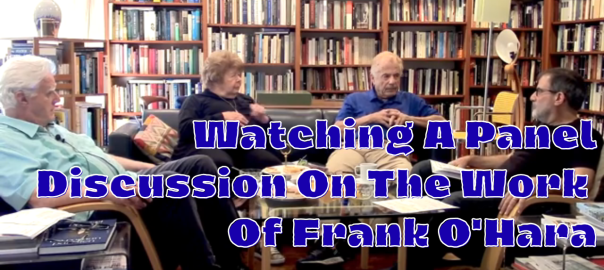
Watching A Panel Discussion On The Work Of Frank O’Hara

Frank O’Hara thought he was a funny guy. He did this, then he did that, and he told you about it. Now we have panels dissecting each word as if his poems were dead; a post mortem where they declare today is devoid of such brilliance. They don’t realize poetry is not dead, it’s just not in their classrooms and textbooks.

There seems to be a disconnect and I think it starts with a faulty supposition, the notion creation of a poem is Idea> Artist> Text. Here, the artist is expressing or reproducing systems and the material text is almost a byproduct. From a small sample size of poets, me, I find this so off-base. Any idea I sit down with is quickly hi-jacked by the storm of thought and feeling that force themselves into language once I put pen to paper. The process should be framed Artist> Text> Idea. Here, meaning through making, not before, the medium – word, sound, form – shapes thought.

Frank was gay, the critics and academics make sure every word he wrote reflects that. They tell using fifty cent words that roll out like a jingle of jumble and jargon. They don’t see, poems should be, just be, fill space between the first cup of coffee and the long walk back up stairs to get dressed for another day at what you call ‘job.’ Don’t pay attention when the voices from the university shout “You missed the point” because you didn’t look at it the right way.

I like Frank, have since I first read him in the mid eighties. Today I learned he was gay. Does it change ‘having a coke with you’ if the speaker is speaking to another man? No, I still love it for the tone, the rhythm, the power of new love it captures. Do I read it differently? No, because my purpose as a reader is to allow myself to feel, to frame those words through the lens of my own experience. It teaches me I am not alone, that others have felt what I do and through image manifested in language take me back to personal experience.

Perhaps the critics and the academics need to come out of the mildewy halls of university that are draped with wrath, where whispers are overheard of the poet being dead, and step into the light. Close their eyes and listen, understanding is optional. They should get back to the basics, get lost in the image, bathe in the rhythm and and let the prosody swell in their loins. Touch that cold dark place where wonder once swelled at the word. Shot out of a cannon into the continuum. Poems live in that liminal space and let you commune with god.
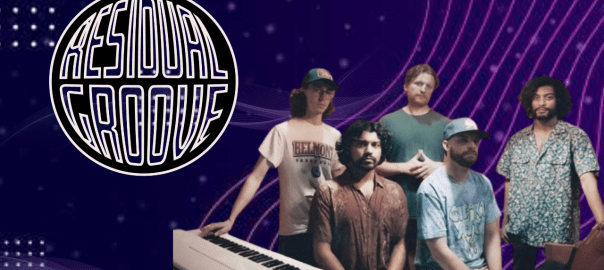
Connecticut’s Finest: Residual Groove

Residual Groove creates the kind of music that conjures late night vinyl, incense, and black lights pouring from under the door at the coolest afterparty you’ve ever been to. It’s smoky, half-remembered funk and soulful rock riffs, some weird cross between nostalgia and infinite possibility, that they stretch over stadium sized hooks you didn’t know you needed. It’s as if the band was born on the edge of a late night jam session that never stopped.

The grooves are intimate and dangerous in the best way. You lean in. The bass becomes a heartbeat. The drums an urgent pulse that makes the night come alive. The keys wash over the foundation, swirling like a whirlpool over your skin. And then the guitar sneaks in, slinky and sharp, like a lost riff.

Then there are the vocals floating above it all. Almost ethereal filling the space like a whispered secret, full of emotion. It changes your mood, you want to dance and cry and kiss a stranger all at once. This is how the great bands do it; perfectly raw, wildly human, and moving with an effortless precision.

It’s music that insists on connection, calling you to walk with it through a landscape painted in neon and reverb. Around every corner there is a promise of something electric. It’s music you feel in your bones as you transverse that liminal space between dreams and memory.

See the interview 04/02/26 at 7E: https://www.youtube.com/live/AyC3gNzMmY0

Awake in the Static or The Prelude to a Renaissance

There is an energy out there, a strange tension in the air. It’s not jubilant or even hopeful, hanging just below the surface. Think when a band is between songs, time hangs for a minute, the amps hum, the mic crackles, and no one is sure what will happen next. The one thing you are sure of, something is coming. It’s not over, there will be another song.

Culture is dead, or dying in real time, is the narrative we are being sold. It’s a TikTok take; the doom scroll version of something more nuanced. Just spend some real time with music or books, find places where people still argue about poetry like life depended on it, and you find another story. The death of culture is more a metamorphosis, unsightly and awkward but inescapable, than the end of all culture.

This is the counter rhythm to the noise, rumbling underneath the algorithm sludge, uncanny-valley AI, and endless disposable content. It is fragmented, not a movement yet. Scenes. Rouge signals.

People are reading. Not the clout seeking “I Read 50 Books This Year” you see on Facebook, something deeper, slower, stranger. People stumbling onto Dostoevsky at 2 a.m. like a secret society was hiding. People arguing about Melville like he just dropped his latest masterpiece a week ago. People digging deep into Virginia Woolf not because some institution said it was cannon, but because the words feed your soul, the sentences oxygen when you come up from your screen.

This is how culture shifts start, in bedrooms and libraries, a little unhinged, obsessive, personal.

Writing is back too; nobody is waiting for permission. There are voices speaking everywhere, on Substack, in indie ‘zines, at readings in backrooms of bars and coffee shops. You can still see the gatekeepers holding on, but their grip is tentative at best, less gods and more a final vestige of the old way.

People are defiant, creating art not because anyone asked but because they refuse to be erased. They are making messy things, uneven things, human things. They are carving a space where none was offered.

That human part matters more than it has in a long time. The AI backlash is real and growing, but unharnessed. People talk about ‘voice’ like it is something that needs to be protected at all costs. The beauty in imperfection is what we crave. Remember disco, the inhuman polish, and everyone suddenly wanting distortion again? People wanted something alive and before long there was punk and hip hop.

People want meaning. They are starved for it and they look back to the things that have stood for centuries like myth and mysticism. Anything that carries weight in a world full of pseudo profundity and off the rails conspiracy theories. It is that desire to feel awe and that the world isn’t just content, that there is depth, texture, even mystery.

Even these three hour podcasts that seem completely self indulgent or essays that find a hundred side roads before coming to something like a conclusion is a rebellion against compression. They are refusing he mantra of easily digestible, quick, and efficient; against the idea everything needs to fit in a scrollable box. Take it as a sign people are willing to try stretching their attention spans and pushing their brains toward capacity again.

All it will take to bring all these pieces together is an artistic breakthrough, a figure who steps out of the noise and pulls it all into focus; someone to make the meaning of this moment obvious. We are still compiling half-formed ideas that may never land in late night rehearsals and scattered jam sessions. It is prelude.

And that is what a renaissance looks like if you rewind to the decade before it’s start. There is no inevitability. It’s confusion, false starts, and people trying things that don’t work. They are arguing about what matters, the sense the old ways are done with only a notion of what will replace them.

You can call it collapse because we are in that murky middle between that past and future. Or you can put down your device, take a deep breath and realize there is something completely different going on. Somewhere just below the noise culture is turning up; awkwardly, imperfectly, maybe even badly, but real. When that spark finally catches fire it’s going to matter.

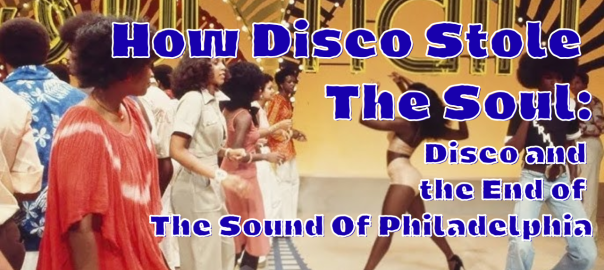
How Disco Stole The Soul: Disco and the End of The Sound Of Philadelphia

There was a time when The Sound of Philadelphia ruled the airwaves with elegance; a lush soul symphony where they wore their hearts on their sleeves and in the span of one four-minute song you could go from heartbreak to hope.

They called it TSOP, the brainchild of Kenneth Gamble and Leon Huff. It was a hit factory that rivaled Detroit and Memphis. A hit factory that was a cathedral built on the tightest rhythm sections and elegant string charts. It preached the gospel of love. Love Train was a sermon. If You Don’t Know Me By Now was dressing up in your Sunday finest for emotional devastation. Their de facto theme song TSOP (The Sound of Philadelphia) offered salvation and was the blueprint for sleek instrumental glide. Philly soul was a complete package, it had something to say.

Everything was good, and Philadelphia International Records was racking up the hits, but things were quickly changing. DJs in nightclubs wanted longer grooves and started looping certain songs to keep the dance floor packed. These songs were all the same, beat forward, the kind that became the backbone for disco.

The door had been cracked opened and disco crashed the house party: the furniture got rearranged, the lights were turned up, and the band was replaced with an endless, uninterrupted beat.

Disco first showed up like the guy someone knew. Everyone said he was cool. Turns out he was the guy who was yelling “The party is just starting” at three in the morning when everyone else had gone home. All of a sudden Do It Any Way You Wanna was being looped by a DJ and the song was now serving the groove instead of vice versa.

The church had been infiltrated and corrupted by disco. There was no going back.

There is one rule in disco, keep the bodies moving. Emotional depth had no place in a cocaine fueled delirium. The message became optional and any depth was cool if you fit in with the pulse, the four-on-the-floor that flies forward with no detours allowed.

Disco had conquered the dance floor, the music had flattened, slowly at first with the stories fading into slogans. Then the transformation quickened as white people discovered disco through movies like Saturday Night Fever and groups like The Bee Gees. The people in charge over at the record companies had their blinders removed and disco became big business. The Bee Gees became the face of the genre, making disco a generic universal vibe that had grandma dancing in the kitchen with the pre-teen kids. Every song on the radio had a mirror ball makeover in the late seventies.

The vocals too, they ended up riding the groove from the backseat, barely looking at the road. In Philly you had voices like Teddy Pendergrass who could break you down in real time, the notes pouring out like a confession from the depth of your soul. With Disco it was an endless chorus that was there to echo the beat.

The record companies loved it. They always love a formula. It was efficient, predictable, a groove that never changed. It is the kind of thing you could build a bank on. The songs got longer, slicker, and interchangeable. There was no band anymore, just a DJ, and they needed continuity and an endless stream of hits.

No more messy, human emotion driving songs. That was the domain of TSOP and Philadelphia International Records. Disco didn’t breathe or hesitate or get into a slow burn, those hallmarks were now a liability to profitability.

As with anything that is co-opted by mainstream culture and can be exploited by the suits running the record labels and radio stations, disco crashed. It burned bright, but burned fast. Remember Disco Demolition Nights? That was backlash coming quick and cancelling a whole glittery jacked-up culture.

Part of the wreckage was The Sound Of Philadelphia and the idea music could be a hit and be sophisticated and deeply felt all at once. The orchestra had packed up and left by the back door. TSOP wasn’t coming back either.

Disco has been rehabilitated through the warm lens of nostalgia, forgetting that in its short life it killed the Sound Of Philadelphia. A death that was far from merciful; more like 4 shots in the stomach and being left on the side of the road. It was seductive at first, then slowly the rhythm was turned into a beat that was so loud you couldn’t hear the heart underneath.

Disco celebrated specticle. TSOP testified; about love, about struggle, about community. Then it got steamrolled into a smooth, shiny, easy to sell piece of gold.

Tedeschi Trucks Band March 18th 2026 Review and Recap

There are bands that play songs, and then there are bands that play time. It is stretched, bent, allowed to breathe until a four minute song becomes a whole emotional weather system. A band like Tedeschi Trucks Band, whose shows are like walking into a Southern soul revival where the sermon comes down in distorted guitars, screaming brass, and gritty vocals.

Last night at the Beacon in NYC, midway through their 10 show residency, this was on full display. From the opening tune Hear My Dear thru to the Space Captain encore, Derek Trucks played slide so liquid it seemed to be melting the frets. He plays like other people breathe, with an unconscious inevitability, like there is no difference between the instrument and the hands holding it.

Standing next to Derek is his partner and the true gravitational center of the band, Susan Tedeschi. When she steps up to the mic the room shifts, warming and welcoming you. She sings in that rare liminal space between gospel confession and beer soaked barroom blues, a rare combination of tenderness and grit. Even the covers feel like she owns them, they become her joys and heartbreaks.

Susan is complimented by Mike Mattison, who took the lead several times during the night including a down and dirty take on Dylan’s Down In The Flood, and keyboard wizard Gabe Dixon whose vocals add an angelic feel. And they are just two of this musical juggernaut.

Tedeschi Trucks band are different from most jam adjacent acts, both in the professionalism and huge sound with the dozen musicians on stage. Horns, back ground singers, and dual drummers, the band becomes a soul soaked mini orchestra under the influence of the Allman Brothers Band.

The night’s set list was a strong mix of covers, originals, and new tunes. Hero, with their producer Mike Dandelion on bass, was the strongest of the new material. It’s “I’m not your hero / I’m not a zero” chorus hits hard and Susan brings it home with her vocal performance.

The horns added punch comes on like the ghost of Stax records. Blind Faith’s Had To Cry Today took on a whole new life. The rhythm section churning in a patient groove, letting the moment swell and build, right before it all locks in and there is a collective exhale.

Nels Cline came out toward the end of the recently added Loving Cup and stayed through Sleepy John Estes’ Leaving Trunk and Rahsaan Roland Kirk’s Volunteered Slavery. It became an extended blues work out stretching twenty minutes. Trucks and Cline traded solos, moving deftly from quiet to a spiral of sound that sounded as if it was defying gravity, while the band raged behind them.

That is where the magic lies, whether taking disparate covers and making them feel brand new or their ever expanding catalog of originals, they take the entire history of American music and make it alive.

The band closed with Matthew Moore’s Space Captain and we all swayed as one. It burned slow in our souls, the chorus of “Learning to live together” ringing in our ears as we spilled out into the cold night, warm for the brilliance we had been bathed in.

They may play Southern rock, blues and soul, but what they really do is play the moment those sounds collide. It reminds you why live music matters when a band like Tedeschi Trucks walk on stage and make life a little bit better.

Set list: Hear My Dear, Fall In, Little by Little, Last Night in the Rain, Until You Remember, Down in the Flood, Isaac/Kebbi Jam, Let Me Get By, Hero*, Tangled Up in Blue, Had to Cry Today, Soul Sweet Song, The Sky Is Crying, Looking for Answers, Loving Cup**> Leaving Trunk**> Volunteered Slavery** E: Space Captain (* With Mike Elizondo on bass) (** With Nels Cline on guitar)

Side One, Side Two, and the Death of Discipline or How Streaming Killed The LP

Listening to a record is ritual. You gently remove the vinyl from the sleeve, place it on the turntable and lower the tone arm. Twenty minutes later you lift it, flip the record and play side two.

Side one had the big opener, the one with the hook, and the radio single. Side two you’d get a little deeper, vulnerable or weird, and often find magic. It was a formula, one created by the constraints of the medium of the music’s reproduction, the LP, as much as the song length. The format directed decisions made by the musicians when deciding what would make the final cut.

There is beauty in this discipline. Twenty-three minutes maximum per side. You had a physical boundary, a hard stop. You had to earn each side. There were ruthless choices to be made. “Does this song deserve a larger audience?” “Does it belong on side one or is it a B-side for a single?” “Does it earn its spot or is this other one better?”

The ultimate editor was time, pitting songs against each other.

This dynamic made the greatest albums. They wouldn’t exist without it. It was a death match in the studio, every song fighting for a spot. Then came the sequencing and another fight. Track one, side one had to kick in your teeth while the side one closer had to make you want to flip the record and once you did you needed to find a warm welcome back.

Things were good, then there was something new, the compact disc, and the Pandora’s box it opened.

74 minute, pushing double LP space. All of a sudden artists had an extra 29 minutes or so. It was heralded as freedom. It was also marketed like freedom: musicians could give the fans everything.

Sadly, they did.

Editing? Optional. That tight ten song LP? Sixteen tracks of sprawl. Songs that would have been on the cutting room floor in 1979 were now Track 14, neatly sandwiched between a remix and a moody acoustic demo no one quite believed in. There was a bad case of bloat. Continuity disappeared with the death of Side One and Side Two. It was no longer a journey, it became a fall down a rabbit hole.

Then just as quickly things shifted again. Enter the internet and the emptying of Pandora’s box.

Time limits? That’s funny. No sides. No runtime. No physical format to provide some guardrail, some limit, some voice to say “Maybe cut this one.” You can upload everything now: half-baked demos, that jam that sounded good in the moment, the song you wrote taking a dump in under twelve minutes because you got to feed the algorithm. It was no longer about making an album, but producing output.

The art of keeping things locked in the vault had become extinct.

That is the problem, constraints make mediocre art great. Twenty minutes or so per side, you think like a storyteller. Every note must contribute something to the albums flow; you cut a decent song in favor of a great one. The fate of a song becomes argued like it is a life or death decision.

And it was.

There is a difference between a good album and the ones we call masterpieces and that is determined, often, by what we never heard. There are miles of tape in dusty studio storerooms holding thousands of hours of okay tracks that lost the argument. Thank God it happened and they died so the album could live.

That is the crux of the matter, there isn’t necessarily too much music, it is there is too little editing. We don’t need to hear every idea a band has, we need the ones that they fought to keep.

This is something vinyl knows.

That’s why we’re still flipping the record.

The Poetry-Industrial Complex: Who Decides What Poetry Is?

You can hear it in barrooms and coffee shops, that old gripe that poetry is run by gatekeepers. The real stuff, the guttural, late night truth, doesn’t live in magazines of MFA workshops. It lives on the street, in the unfiltered voices whose rhythm is a jackhammer that reveals diamonds.

And they would be right.

There is a strange little ecosystem, a poetry-industrial complex so to speak. It is made of small magazines, university presses, and workshop networks. It follows fashion and rewards proximity.

The right editor at the right reading and you might get the nod. That old cliché about who you know has become the invisible submission guide. If you want recognition, and who doesn’t, this is the sanctioned road, the tried true way of carefully crafted, worked over until nothing unpredictable survives poetry forged in workshops. It can be electric, but it is more often than not so well behaved it loses its truth.

Academia asks the poet to translate them self into something publishable, full of language theory, perfect iambs and workshop norms.

But there is another side, another scene, like the pirate station you can find if you turn the dial just a little and let the static bleed. It is the poems that spill out from the feedback of an open mic night on a half broken PA. It is the words that fill the backs of junk mail and little notebooks walking home from a 10 hour shift.

These verses don’t care if they’re publishable. They stick like a song you can’t shake. Think Patti Smith with three chords and a confession that hits like a sledgehammer, or Gil Scott-Heron detonating thought bombs mid-line.

The poetry that refuses to ask permission to exist. The defiant poetry that shows up and dares you to look away.

The problem is that no one sees these poems. The system that decides who gets published also works as a system to filter voices. The record kept is incomplete, magazines are archives of what a small insulated group thinks is poetry. People who I am sure are trying to, imperfectly, make sense of what matters, but only hear echoes.

Not making this into some mustache twirling villain situation. It is just the system doing what it does, narrowing. That is where the tension swirls, somewhere between saying what matters and having the poem be something that might last.

You end up with a disconnect. Poets smoothing the edges of their voice to get in the door or refusing to compromise and risk their voice being unheard.

Poetry isn’t owned by magazines or collected anthologies of the ‘best new poets,’ but magazines do act like a style book defining what is considered a poem at the current moment. The real stuff, the messy, unrepeatable, blood and sweat poetry happens elsewhere, off the page.

If you listen close, somewhere between a whisper and a scream, you can hear it, where nobody’s asking for credentials to have your voice heard.

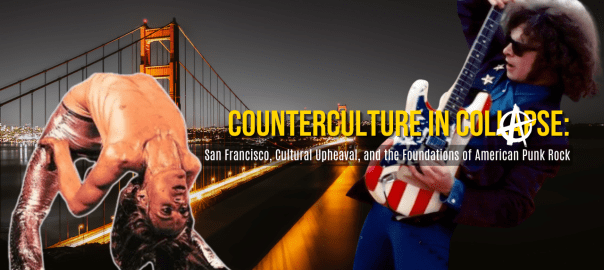
Counterculture in Collapse: FM Radio, Cultural Upheaval, and the Foundations of Punk Rock

The alienation and social unrest found in the three chord hopped up music called Punk didn’t just appear in New York in the mid seventies. Long before CBGB’s became the epicenter for a new music there were bands pushing back against the corporatization of Rock and Roll. The polished, radio friendly sounds of bands like The Beach Boys, Beatles, Elvis and Motown had become passé while songs like “Louie Louie” by The Kingsman were pushing boundaries. The barely intelligible “Louie Louie” was actually considered subversive with the FBI investigating Richard Berry in February 1964 over complaints the lyrics were obscene. Nothing came of it, but the point was made; rock and roll was dangerous.

These new sounds were played fast and loud for a disenfranchised youth audience, fueling the dreams of hundreds of kids in high school rock bands pounding away on 2nd hand guitars. If you knew 3 chords and could play for 2 and a half minutes you could do this rock and roll thing. Groups like The Monks “I Hate You,” The Count Five “Psychotic Reaction” and The Sonics “Psycho” stripped back all the gloss and pomp. It was attitude over virtuosity. Teen angst unrestrained and amplified through a blown speaker. They were playing by their own set of rules.

You can say it started in 1955 when a new sound came across American radio. Sonny Burgess “Red Headed Woman,” Billy Lee Riley “Flying Saucers Rock and Roll,” Carl Perkins’ “Blue Suede Shoes” and of course Jerry Lee Lewis “Great Balls Of Fire” were all attitude and wild showmanship. They were pushing boundaries with their shows, lyrics and primal beat. In 1958 Link Wray upped the game, releasing “Rumble,” a down and dirty instrumental that Iggy Pop said inspired him to join a band. From this even rawer sounds like Sam the Sham and the Pharaohs “Wooly Bully”, The Kingsman’s “Louie Louie” and The Trashmen’s “Surfin’ Bird” entered the mainstream consciousness, further pushing the idea of what rock and roll was.

It was even happening in the heart of Motown where Wayne Kramer and Fred “Sonic” Smith together with Rob Tyner, Michael Davis and Dennis Thompson started what would become the first cornerstone of Punk Rock’s foundation, The MC5. It was 1964 and the folkie movement had gained steam with the likes of Bob Dylan and Phil Oakes making protest music with acoustic instruments. It was there that the idea that you could protest with electric instruments just as easily was planted and over the next few years the band got tighter, began writing songs and by the late 60s were waiting for a chance to be released on the world.

American popular culture in 1967 took a 180 with what was known as the Summer of Love. A media construct to try and explain what was happening socially, musically and culturally in SF. Bands played long free form shows at various reclaimed ballrooms around the city and a reevaluation of what could and couldn’t be done within the context of a rock and roll show started. Sex and drugs were no longer seen as taboo and a new way of thinking was born. Sadly, the Utopia that was being sold didn’t last long and by 1968 the whole thing had become a shitshow.

A big factor in the decline of the SF scene was the rise of FM radio. KSAN in San Francisco had become a model for the wild west that was FM radio, playing deep album cuts, unknown bands and live performances, but what started as a means to share new sounds and a new philosophy to a larger audience was co-opted in 1968 by big media conglomerates to sell records. FM stations began to pop in small town America and bands like the Jefferson Airplane and Quicksilver Messenger Service, whose long jams were favored on these formats, became stars. There was also an unintended consequence, it opened people’s minds and the kids began flocking to San Francisco to take part in free love, music and drugs. The problem was this perceived ‘unlimited freedom’ led down some dark roads and the Summer of love was over as quickly as it began in a haze of bad drugs and broken dreams. As FM became co-opted by the industry, a new underground energy sought to reclaim rock for the disaffected, paving the way for punk’s DIY ethos.

At the same time anger over the Vietnam war had begun to stoke serious upheaval in middle American. Children were pitted against parents and friends against neighbors, the Tet Offensive showed America losing a war they shouldn’t have been in, RFK and MLK were assassinated and the Democratic National Convention fell into chaos with cops beating kids in the streets. The call to peace and love began to fall on deaf ears with the daily assault of images of the war on television and the time was right for the MC 5. They became the soundtrack for the violence the country witnessed at the 1968 Democratic Convention and had found their voice.

By 1969 the SF scene had completely collapsed with the Hell’s Angels killing a concert goer at Altamont Speedway while The Rolling Stones played Sympathy For The Devil. Out of the ashes came the MC5’s seminal release Kick Out The Jams and they provided a much needed foil in American music to the sounds on the radio that had grown from a counterculture movement to a pop cliche. Recorded live at Detroit’s Grande Ballroom on October 30 and 31, 1968, it preached something radically different, embracing their militant activism of their manager, the poet, John Sinclair. They were throwing a different kind of Party.

The music they played was similar in some ways to the SF sound in as much as it was loose and favored longer solos, but it was differentiated by the intense edge of the songs, raw and unpolished, overtly political and not shying away from inciting violence. Because they were, in the end, a reaction against and the next logical step to the SF counterculture. Sadly, they didn’t find a mass market and even after getting a big feature in Rolling Stone, never were more than an underground band. By 1972 were done. Their influence continues to this day, but at the time it left the underground with a void waiting to be filled.

Flower power had become a tourist trap, a glittering corpse of failed idealism, and bands like the MC5 appeared to fill the void. Slick production and love and light lyrics gave way to music that could punch you in the gut; three chords and maximum noise with lyrics rooted in a spit in the face of authority manifesto fueled by casual nihilism.

From the smoke filled basements in Detroit the sound of kids who were sick of the charade called FM radio with it’s sixties idealism appeared. It answered the call for unpolished, raw, uncut music. It wasn’t polite. It wasn’t pretty. It was a musical middle finger to a society that had failed the youth with the promise of freedom and instead delivering disappointment. They answered with a revolution made up of amps, sneakers, and sneers.

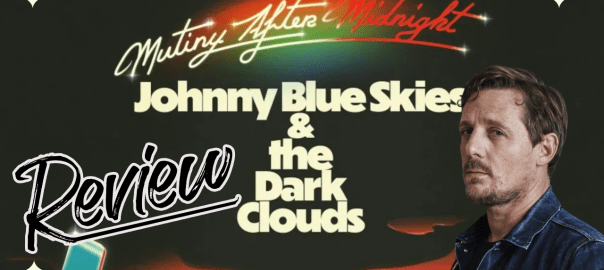
Review: Johnny Blue Skies Goes Rogue On Mutiny After Midnight

The artist formerly known as Sturgill Simpson has always been an outlaw, the kind who kicks open the bar door and asks why the jukebox keeps playing the same 6 songs. With Mutiny After Midnight, released under his alter ego Johnny Blue Skies, he’s taking it a step further and kicking the whole damn jukebox down the stairs.

Luckily we get to dance on the wreckage. Dance to a record that is a horny late night groove throw down. Equal parts outlaw country, disco, and psychedelic experiment, we find an LP full of bar-band verve when the clock is calling closing time. The music you put on when the lights are dim and the conversation turns strange.

With his backing band The Dark Clouds we get a class in old school rhythm. The songs move, and make you move, but not like the suits in Nashville would like it. It is loose, hypnotic, as much a jam session as a tightly constructed studio product. The guitars scintillate while stretching grooves, the keys swell and the drums and bass are locked in with the swagger you have on a Friday night when everyone gets paid and everyone wants to get laid.

The lyrics zig zag between frustration at the political landscape in America, keeping your dark side in check, and the half horny musings of a midnight philosopher. We find a broken America, full of bruised bodies begging for freedom, recounted with Sturgill’s wry humor and biting criticism. His sincerity is that irreverent shrug, it never feels preachy and that is the magic.

This is an artist who understands absurdity, he can take topics and phrasing that make the Music Row pundits cringe and turn them into an invitation to party. It is rugged charisma, provocative but playful, that has you chuckling as you’re cutting the linoleum carpet.

Critics may call out that the album feels unfinished. Those critics don’t understand that is why it works, why it breathes. It is trying to be alive, not perfect.

Johnny Blue Skies is going up against the machine, eschewing the trap of chasing algorithms and meticulous branding to make a dystopian disco protest joint. It is a greasy, naughty, sometimes deranged manifesto about sex, drugs, and what it really means to be an American.

Not the album America asked for, but maybe the one it needs.

The Revolution Inside: Laura Nyro

Some people sing your soul, hitting the deepest parts of you; they give you a safe place to be vulnerable. Unexpalinable without a deep listen, Laura Nyro isn’t a playlist recommendation, she is a catalyst for spiritual awakening.

You know her songs. “Stoned Soul Picnic,” “Wedding Bell Blues,” and “Sweet Blindness” became gold for the 5th Dimension. Blood, Sweat & Tears turned “And When I Die” into brass soaked timelessness. Three Dog Night taught us to hide our hearts in “Eli’s Comin’” like our lives depend on it.

But knowing the hits is only half the story.

Her own recordings eschew the pop trappings of Barbra Streisand and Linda Ronstadt’s interpretations leaving us with something rawer, truer. Choruses thunder in striking at the deepest part of you, tempos are fluid morphing mid thought, and melodies rise and fall like the tide. It is intimate, coming in flashes of calm and panic.

The streets were filled with revolution in the late sixties and rock took itself seriously, anthemic choruses and loud guitars were the order of the day. Nyro went the other way, her revolution was internal and not fueled by rocks more base instincts.

Instead she took a little from the Brill Building, gospel rapture from the Baptist church, Broadway’s penchant for drama, the sweet doo-wop from the street corners, and layered her street smart lyrics over top like steam lingering on summer asphalt. Melodrama became holy. Vulnerability became a badge of honor.

She wrote her first hit at seventeen and by the time Eli And The Thirteenth Confession came out she was already a master of pure pop goodness, invitation and incantation at once. Close your eyes as her voice goes from alluring to despair in a breath on Poverty Train. Let the title track’s chorus roll over you as she joyously shouts devotion and defiance.

It can be a shock to the system going from a whisper to a scream, following her instincts in the dark glory on New York Tendaberry. The edges weren’t smooth and that was revolutionary in an era of pop waifs and folk goddesses. This was sensual, operatic, and then abruptly funny or ferocious. The opening strains of You Don’t Love Me When I Cry sneak up you, asking you to lean in closer before knocking you back through a wall. This was a demand, to be felt, not just heard.

The list of artists who fall under her influence includes names like Elton John, Joni Mitchell, Rickie Lee Jones. Even artists who you may think sound nothing like her owe her a debt. The emotional maximalism, the touch of jazz phrasing, the narrative bravado made the pop structure stretch, morph, and land like a gut punch.

At one point she decided to stay home and just be mom, stepping back from the grind with stubborn integrity. She would come back from time to time, Smile in the mid seventies, and in the late eighties when she toured regularly and released new music. The passions may have changed, the songs found an earthier feel, but the intensity never waiver. It was almost as if she had found the peace she was seeking as a young songwriter.

1997 saw Laura leave the planet. Too young. Fuck cancer. But has she really left us? She lives in all the artists who worshiped at her alter, seeing that pop music was more than product. It was a reckoning of trembling piano and a chorus shouted from the roof tops, walking the line between restraint and abandon.

As much as the sixties were about rebellion, they may have been more about possibility. A chorus outside the rules, she heard the future and brought it into the now. She gave us hits, but also permission, when you felt too much, were too much, to look at the dark.

That is what rock and roll always wants to be.